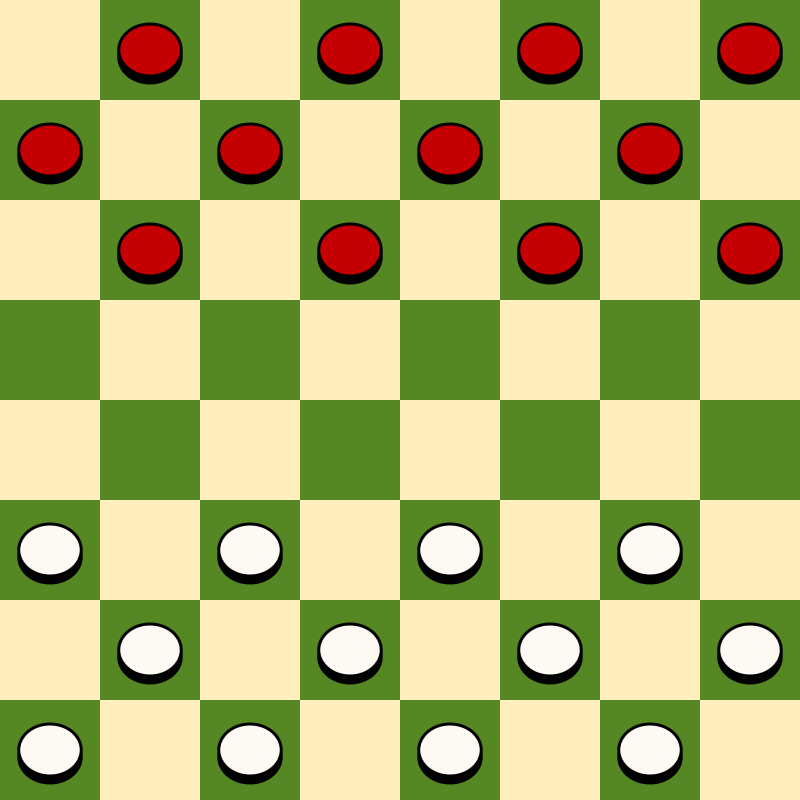
The starting position in English draughts, also known as checkers. Unchanged. Image source. Licence.

A checkers player often has to decide whether a position is promising long before either side wins. Arthur Samuel's program faced the same problem. His 1959 paper described ways a computer could get better at making those judgments through experience.
One approach was to remember positions and the scores the program had already worked out for them. That could save work if a position came up again. Samuel also tested an approach that changed the way the program combined features of the board when it estimated how good a position was.
Remembering and generalizing solved different problems
A remembered score helps most when a position matches an old one. A scoring rule based on features can also be applied to positions the program has never seen. Samuel used the game to investigate how those forms of learning affected play.
Checkers made this distinction concrete because the computer could examine possible moves, revise how it judged them and play again. The paper documented an experimental approach to learning well before the term became associated with today's large neural networks.