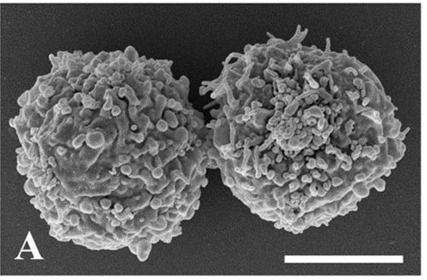
A drug already used for one illness can sometimes be useful for another. The difficulty is knowing which of thousands of drugs to try. In a Nature study, Google's Co-Scientist system proposed new uses for existing medicines, and oncologists helped select candidates for experiments involving acute myeloid leukemia, a cancer of the blood and bone marrow.

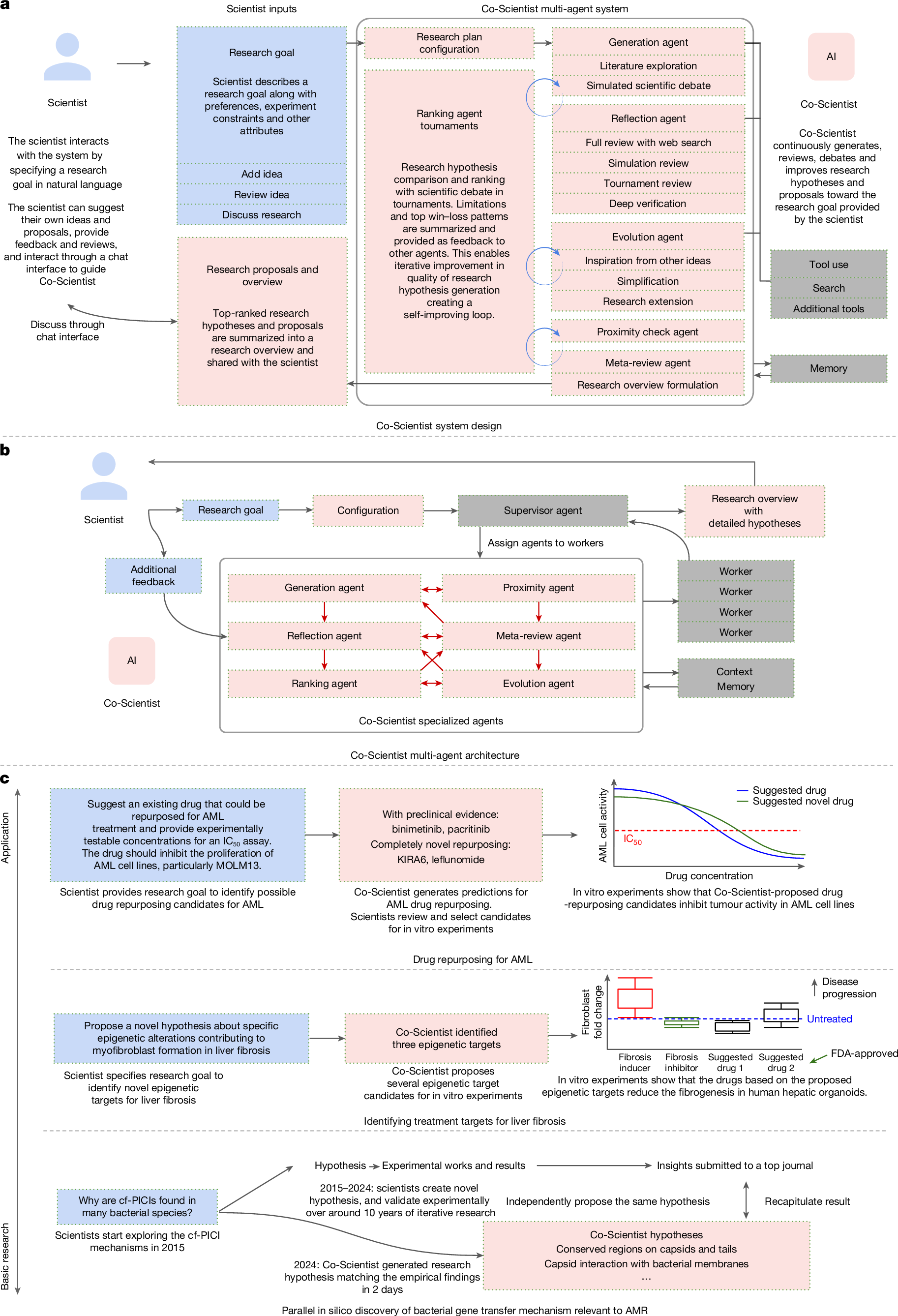
Figure 1 shows the authors’ workflow. The drug repurposing experiment is the upper row of panel c. Image by Gottweis and colleagues, Nature, CC BY 4.0, unchanged.
Co-Scientist uses several Gemini-based agents that generate, critique and rank hypotheses. The paper describes a tournament in which proposals compete and can be revised. For the leukemia work, experts reviewed the highly ranked hypotheses and considered whether a drug might affect processes involved in the disease.
Cell cultures gave the shortlist a first check
Researchers chose five initial candidates for testing. One, binimetinib, reduced cell viability in several leukemia cell lines, the paper reports. Cell lines are cells kept growing in the laboratory so experiments can be repeated under controlled conditions. Other selected candidates showed little or no effect in one of the leukemia lines at the concentrations tested.
Alphabet or a subsidiary funded the study, and many of the authors worked for Alphabet. The experiment shows how a model's suggestions can be narrowed and tested. A response in cultured cells is an early result. Determining whether a medicine helps patients takes a different series of studies.