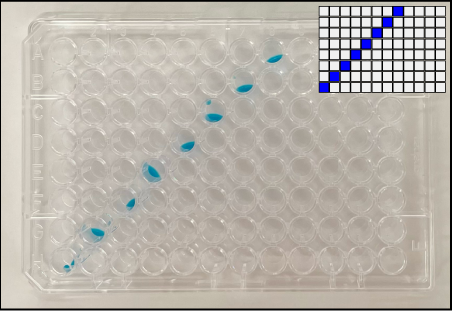
Preparing a reaction takes instructions precise enough to say what goes in each well of a plate and when to move it. In a 2023 study, researchers gave a GPT-4 system access to tools for finding information and writing code, then asked it to plan chemical experiments. The system, called Coscientist, translated parts of the plan into commands for an Opentrons liquid-handling robot.

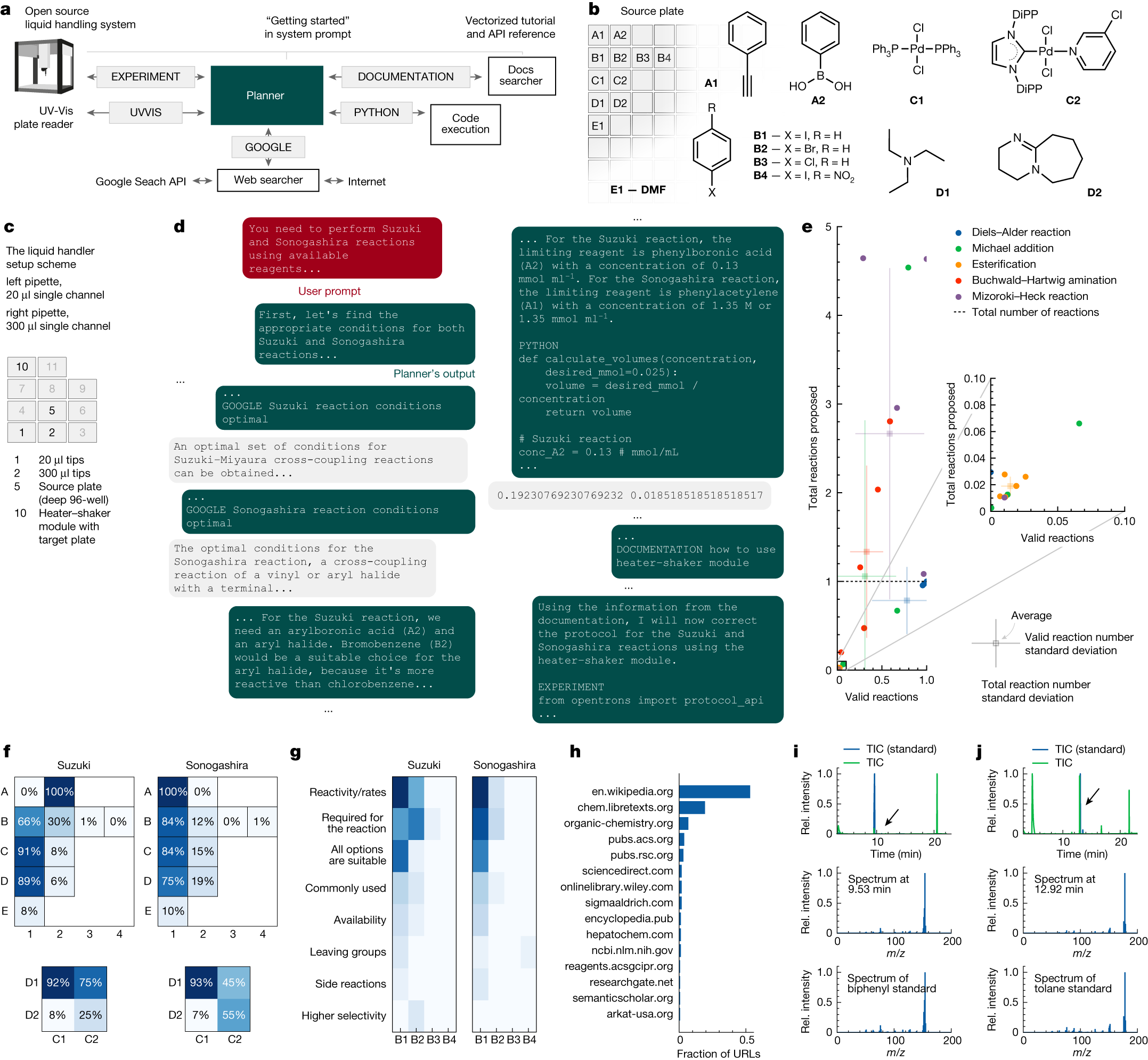
The paper documents the equipment, setup and reaction measurements in Figure 5. Image by Boiko and colleagues, Nature, CC BY 4.0, unchanged.
One test involved palladium-catalyzed cross-coupling, a way to join pieces of molecules with the help of a metal catalyst. The setup included a heating and shaking module introduced after GPT-4's training-data cutoff, according to the paper. The model could consult documentation and use it to write code for the equipment it was given.
People still moved the plates
The authors report that Coscientist generated and executed plans for two types of cross-coupling reactions, and they compared instrument readings from the reaction mixtures with standards for the expected products. The experimental setup still required people to move plates between steps. It showed that an AI system could bridge the gap between a chemistry instruction and some of the equipment commands needed to carry it out.