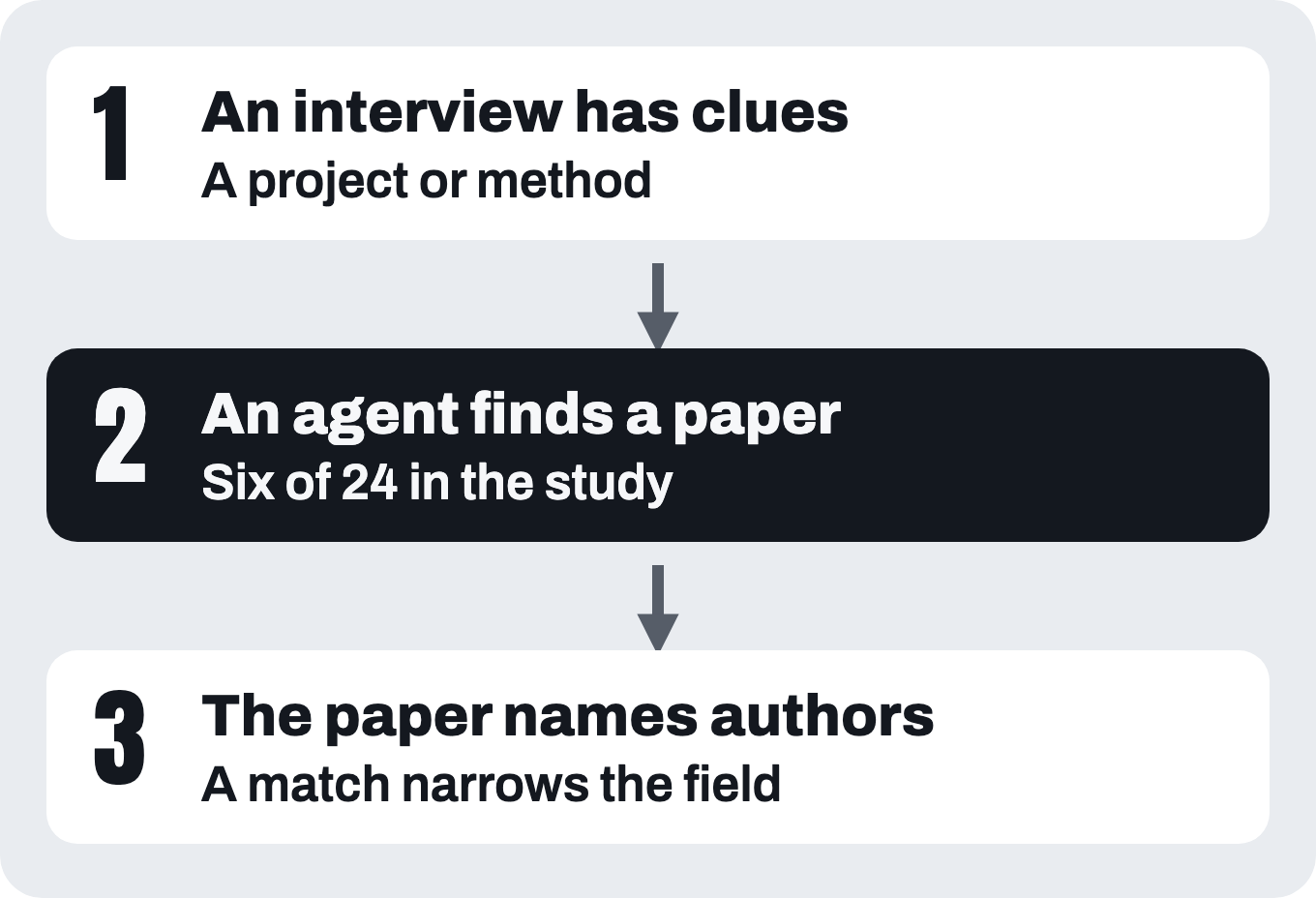
An interview can be stripped of names and still describe a project that only a few people worked on. Tianshi Li tested that possibility on scientist interviews Anthropic released about the use of AI in research. In a January 2026 preprint, Li reports that readily available AI agents linked six of 24 transcripts to specific scientific works.


A scientific paper can reveal who worked on a project. For some matches, Li found that the evidence pointed to a particular interviewee. For others, it narrowed the possibilities to people associated with the research. Those are different degrees of exposure. The study examined a small subset and gives no estimate of how often the entire dataset could be traced.
An interview describes more than a name
A useful interview often records why a researcher chose an unusual technique or what happened when they tried it. Details like these are useful to readers precisely because they are specific. Public papers, lab pages and other records can make the same details searchable.
Li says the findings were shared with Anthropic. The case gives researchers a concrete question before releasing transcripts. What could someone link to the people in the study using what is already public?